Product Design Engineer · San Francisco Bay Area

I find the customer’s problem, design the answer, and ship it myself.

I’m a product design engineer in the San Francisco Bay Area. I have designed for the web since 2019. For the past three years I have designed and built AI products for real businesses, working next to the people who use them and shipping in React and TypeScript with Claude Code.

$10K+
online sales in the first month of East Bay Furniture’s store
70
students building on Palstart every day
85%
more online sales for Drizzled with the new site

01East Bay Furniture · Pittsburg, CA

An AI designer that moves the store for you

A furniture showroom with nearly 9,000 pieces to sell and a floor that fits a fraction of them. I designed and built the online store, the AI designer that guides shoppers through it, and the sales desk the staff use on the floor.
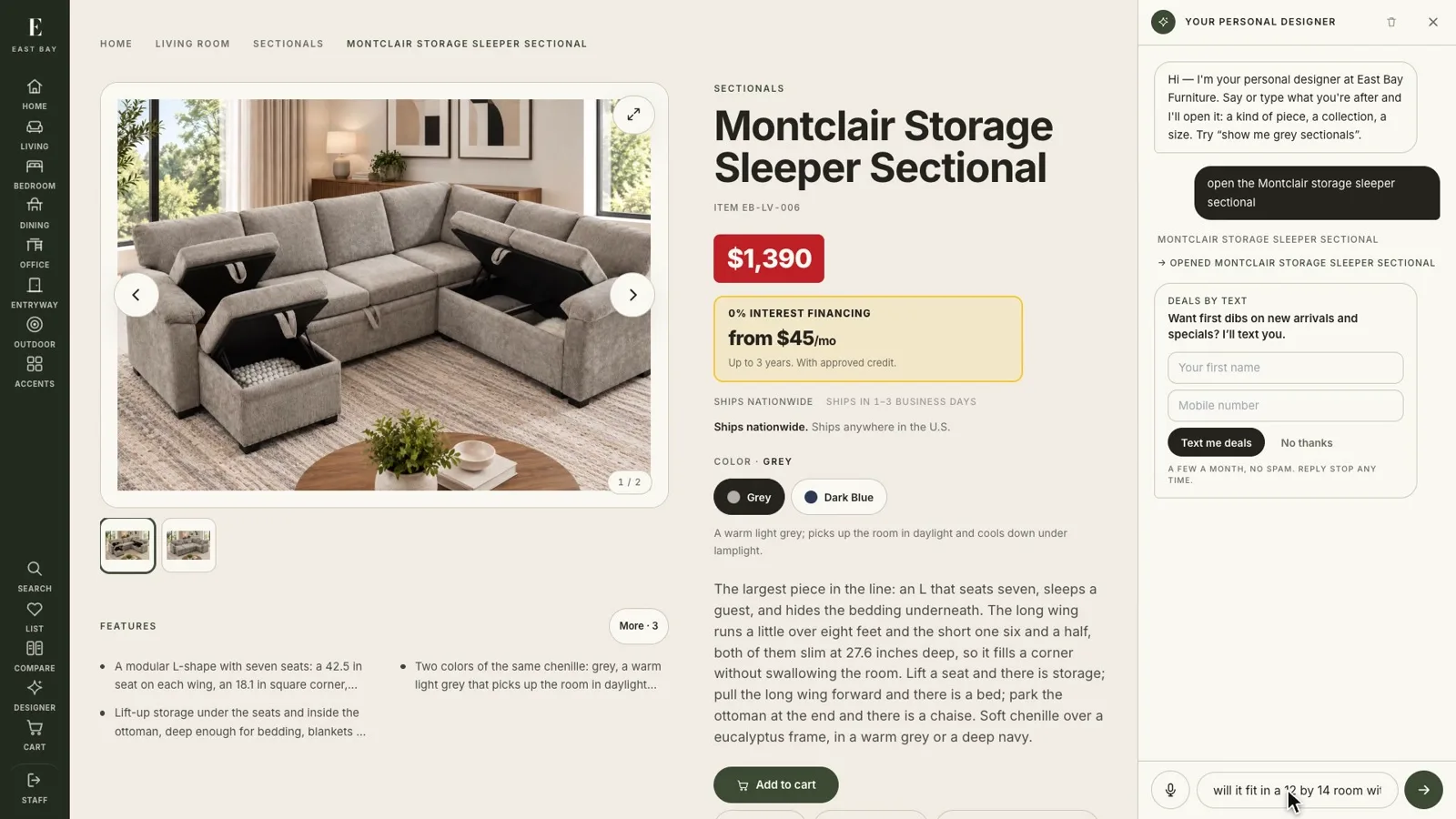
A product page for a sectional sofa on eastbay.direct. A panel on the right shows the shopper asking the AI designer to open the piece, and a note that the page opened it.
The shopper asks. The page moves. The log line under each reply says exactly what the designer did.

The customer problem

Shoppers describe a room, not a filter: “a grey sectional with storage under $1,500 that fits a 12 by 14 room.” Category pages could not answer that across a catalog this size. And the sales team could not see what an online shopper had been looking at, so every conversation started from zero.

One design decision

The assistant drives the page instead of answering in a chat bubble. Ask for a piece and the site opens it, picks the color and scrolls to the dimensions. Every action is checked against the live catalog before it runs, so it cannot show a piece that does not exist. When the spec sheet is missing a fact, it says so and hands off to the store.

What I built and shipped

The React storefront and checkout. The assistant and its page tools, by text and by voice. Catalog imports from the makers’ feeds. A search eval of about 230 checks. English and Spanish pages. And the sales desk, where staff see the same shopper, search the whole catalog by voice, and send a list to the customer’s phone.
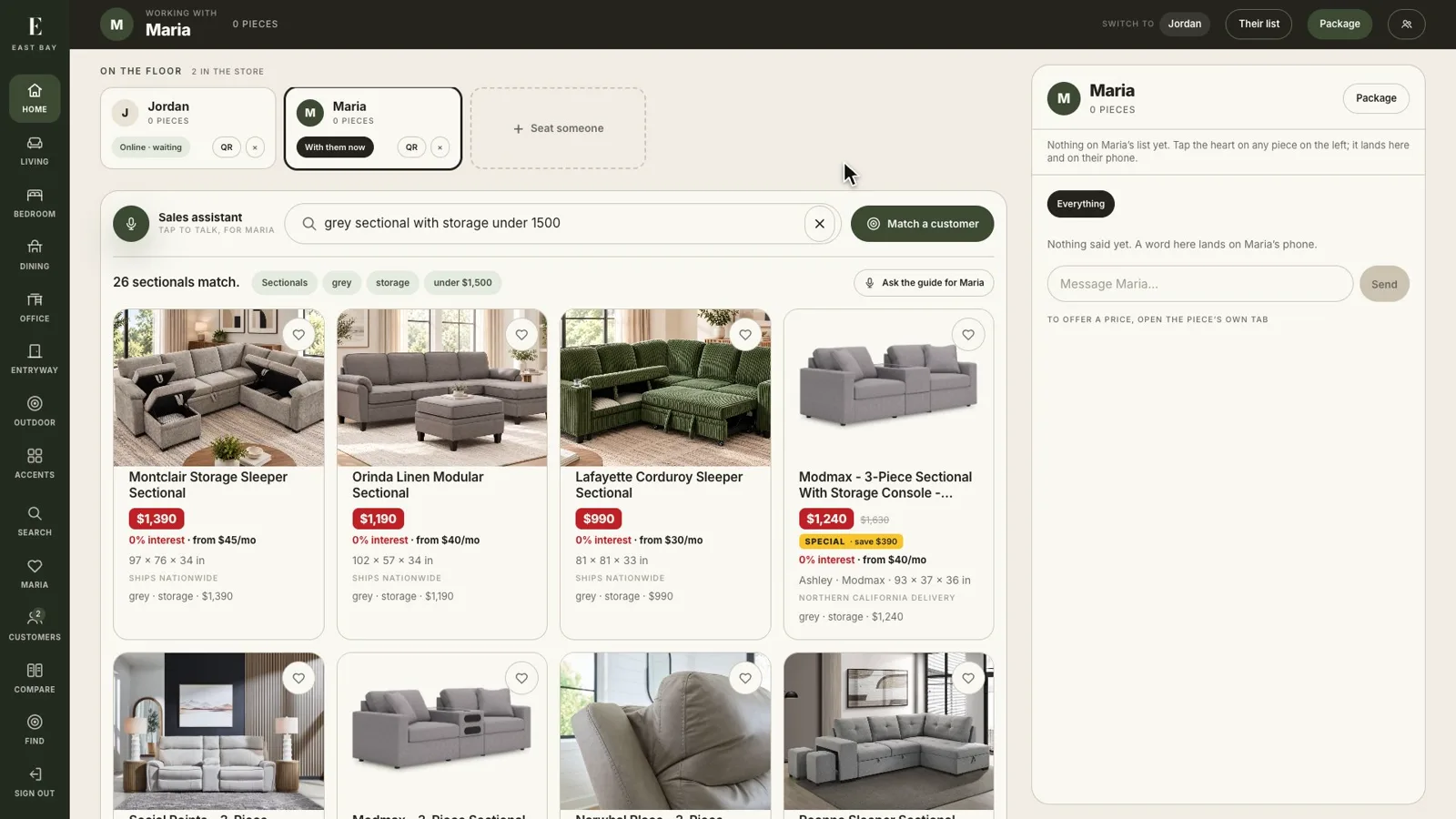
The sales desk: two shoppers on the floor, a voice search for a grey sectional with storage under 1500 dollars, and matching pieces.
The sales desk. The same catalog and the same shopper, seen from the showroom floor.

02Palstart · My own classroom

A classroom where every student ships to real users

Palstart is the platform I built for my own classes. Students build games and apps with Pal, an AI partner that writes the code with them and teaches as it goes, then publish to a live link their classmates can use.

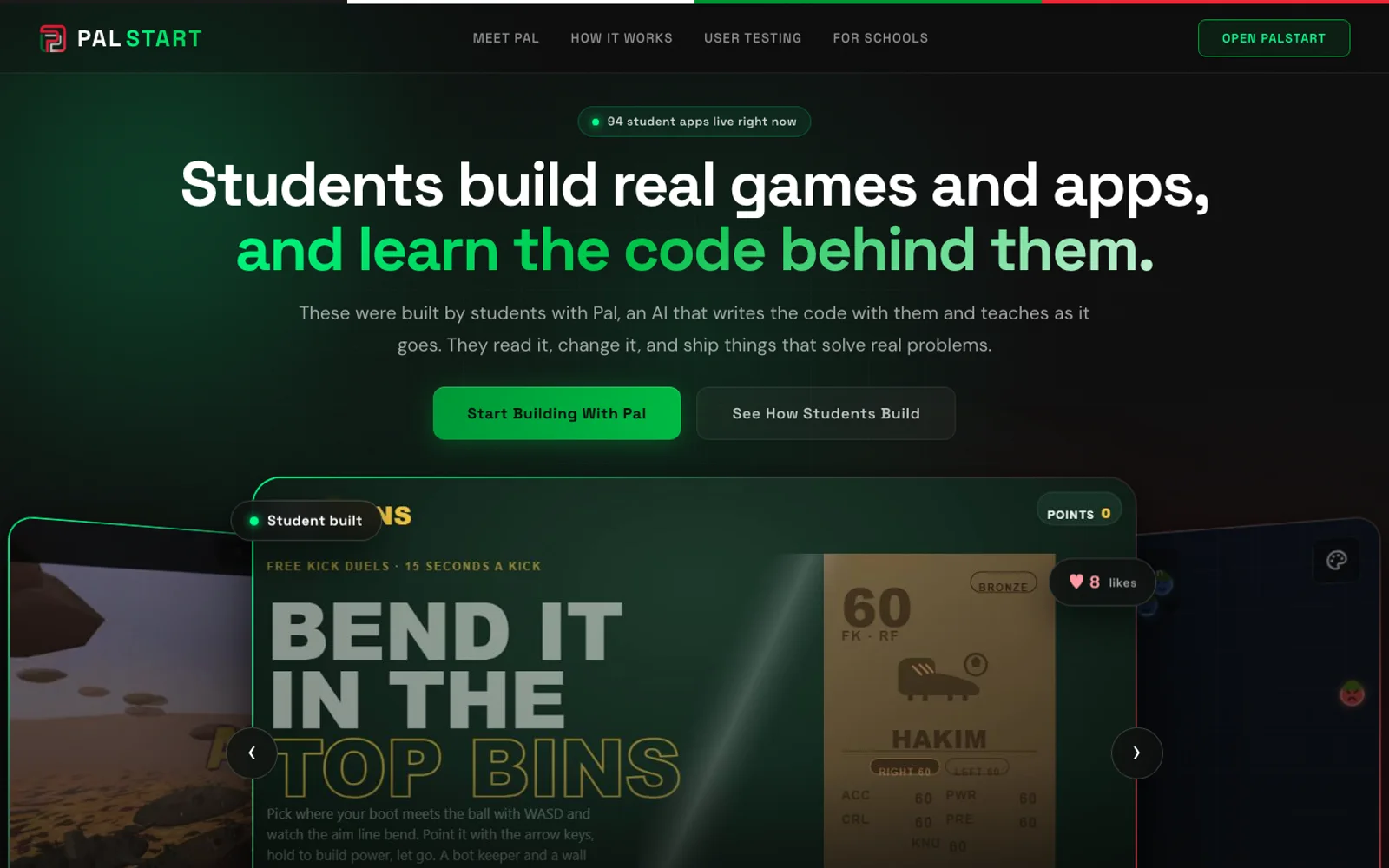
The Palstart home page: Students build real games and apps, and learn the code behind them. A student-built soccer game is featured below.
Student work is the home page. Every card is a live app a classmate can open.

The customer problem

With AI tools, a student can get working code without understanding it. And what they build never leaves their own screen. Nobody uses it, so they never learn what a real user does with their work.

One design decision

User testing is part of the product, not a lesson about it. Every project publishes to a live link and lands in the class showcase, where classmates play it, like it and leave comments. Students come back to fix what their users found.

What I built and shipped

The whole platform, on my own: the AI build partner, the in-browser runtime for student apps, one-click publishing, the class showcase, and accounts and saved data for the apps students make. I also wrote a public guide for outside AI assistants, so code from ChatGPT or Claude pastes in and runs the first time.

70students use it every day. 650+ projects built, 500+ comments left on each other’s work.

  • React
  • Tailwind
  • LLM APIs
  • llms.txt
  • Claude Code
See it live at palstart.app

03Drizzled · Stockton, CA

The site and the staff app a dessert trailer runs on

Drizzled is a family dessert trailer in Stockton. I designed and built their site in React and TypeScript, then the staff app the crew uses every shift.

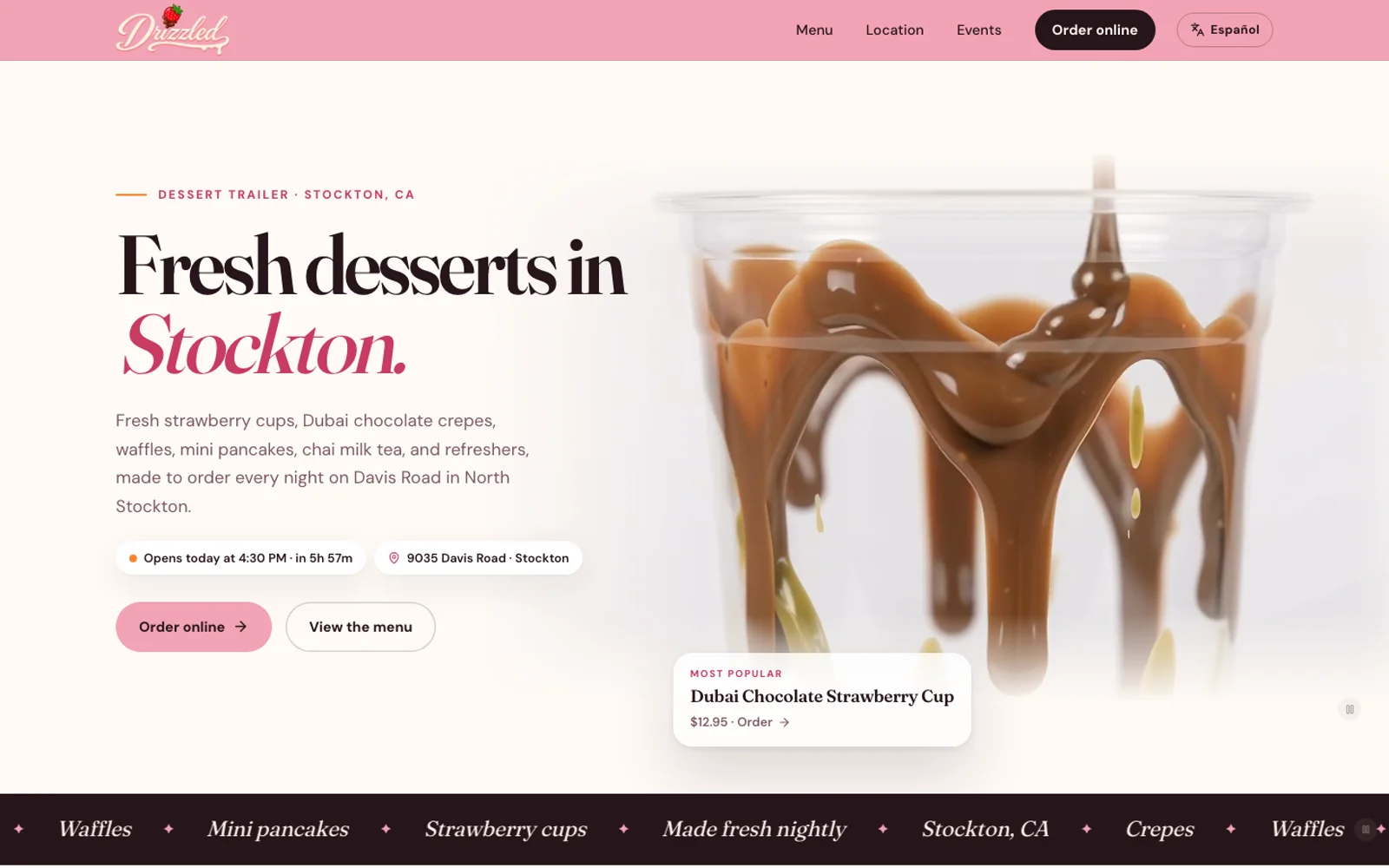
The Drizzled home page: Fresh desserts in Stockton, with a strawberry cup being filled with chocolate, an open status chip, and an Order online button.
Open status, address and ordering sit above the fold, because those are the three things people come for.

The customer problem

Customers found the trailer on TikTok and Instagram, but had no simple place to see the menu, check if it was open, or order ahead. Behind the counter, the crew needed to know what was low on the truck and what to buy before the next night.

One design decision

One file is the source of truth. The menu, prices and hours live in a single typed file that feeds the page, Google’s structured data and an llms.txt file. The site, search engines and AI assistants can never disagree about what the trailer sells or when it is open.

What I built and shipped

A pre-rendered React 19 and TypeScript site in English and Spanish, with a page for every dessert, live open status and online ordering through Square. Then the staff app: a closing count with one item per screen and a phone keypad, schedules, tasks, and an ordering agent that reads two weeks of counts and drafts the next shopping list for a person to approve.

Built to be read by AI, too

People now ask an assistant before they open a website. So every site here is written for two readers: people and AI models. Each one publishes an llms.txt file, and the two storefronts add structured data, so ChatGPT, Claude and Gemini describe the business the way it really is.

Before that

  1. 2023 to 2025

    FrontDesker Founding product designer and engineer

    Clinician-facing React web and desktop apps for hands-free note taking, AI-assisted X-ray review and voice appointment briefings, designed around real clinic limits: no typing during an exam, and patient data on HIPAA-eligible infrastructure.

  2. 2021 to 2023

    Least Authority UX/UI designer and project manager

    Designed the UX and UI for Destiny, a private file-transfer desktop app, and led development of PrivateStorage, a privacy-first storage app. Managed security audit projects for enterprise clients from kickoff to final report.

About

I trained in UX and UI design at CareerFoundry and worked as a designer at Least Authority. Then I learned to build what I designed, so that a prototype and the real product could be the same thing.

I hold CompTIA Security+ and finished UC Berkeley Extension’s cybersecurity program with a 98% average. I teach product design and development, and my students use my software every day, which keeps me honest about what works.

I work in Claude Code all day. I like sitting next to the customer while I do it.